

Get A Quote
One of our team would be happy to have a chat with you about your requirements, answer any unanswered questions and measure up at a time that suits you to provide you a free, no obligation quote.

If you’re replacing your windows, you’ve probably come across terms such as A-rated windows, BFRC ratings, U-values and energy-efficient glazing.
But what do these ratings actually mean, and how much difference can they make to your home?
Window energy ratings are designed to make it easier to compare the performance of different windows. Choosing energy-efficient windows can help reduce heat loss, improve comfort and lower the amount of energy needed to heat your home.
If you’re considering replacement windows, understanding these ratings can help you make a more informed choice.
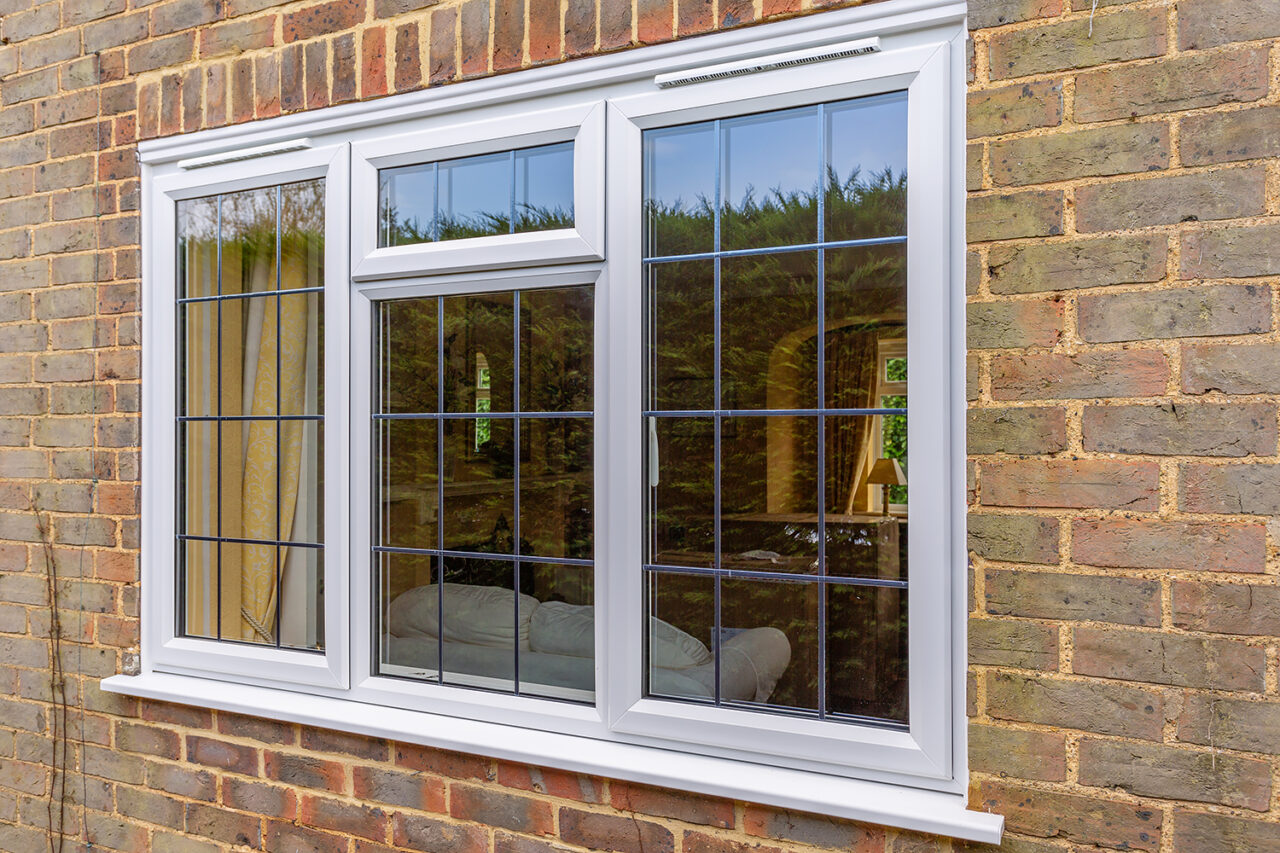
A Window Energy Rating (WER) indicates the overall energy performance of a complete window.
Rather than considering the glass alone, the calculation takes several aspects of the window into account, including:
Together, these factors provide an indication of how effectively the window performs.
In simple terms, a higher-rated window is designed to retain heat effectively while also taking advantage of useful solar energy from outside.
In the UK, the British Fenestration Rating Council (BFRC) provides an independently verified Window Energy Rating scheme.
Its familiar energy-rating scale makes it easier for homeowners to compare the performance of different window systems, with ratings extending up to A++ for highly energy-efficient products.
At Sheerwater Glass, our windows are BFRC Rated, giving customers reassurance that their energy performance has been independently assessed.
| Term | What it tells you | Why it matters |
| Window Energy Rating (WER) | The overall energy performance of the complete window | Makes different windows easier to compare |
| BFRC rating | An independently verified energy rating | Provides reassurance about tested performance |
| A-rated / A++ windows | Where a window sits on the energy-rating scale | Higher ratings indicate stronger overall energy performance |
| U-value | How readily heat passes through a window | Lower U-values generally indicate better insulation |
| Low-E glass | Glass with a heat-reflective coating | Helps retain warmth while allowing daylight into your home |
For more information about how the rating system works, visit the British Fenestration Rating Council (BFRC).
The appearance of your new windows is important, but how they perform will affect your home every day.
Choosing well-rated, energy-efficient windows can offer several long-term benefits.
Older windows can lose significant amounts of heat through outdated glazing, ageing frames and worn seals.
Modern replacement windows are designed to reduce heat transfer and draughts, helping your home retain more warmth during colder weather.
You may notice:
For many homeowners, this improvement in everyday comfort is one of the most noticeable benefits of upgrading older glazing.
If less heat escapes through your windows, your heating system may not need to work as hard to maintain a comfortable temperature.
Energy-efficient windows can contribute to:
The exact savings will depend on your property, existing windows, heating system and other insulation measures, so it’s sensible to avoid viewing new windows as a standalone solution.
However, alongside measures such as loft and wall insulation, energy-efficient glazing can play an important role in creating a more efficient home.
The Energy Saving Trust also provides independent advice on windows and home energy efficiency.
Energy-efficient glazing can also help reduce condensation on the inside surface of your windows.
Because the internal pane of glass is generally kept warmer, moisture in the air is less likely to condense when it reaches the window.
It’s important to remember that condensation can have several causes, including humidity and inadequate ventilation, so replacing windows isn’t necessarily a complete solution to condensation problems.
However, thermally efficient glazing can help reduce the likelihood of condensation forming on cold internal glass surfaces.
Window performance matters in summer as well as winter.
Modern glazing can help manage heat transfer through your windows, contributing to more stable and comfortable indoor temperatures throughout the year.
The result is a home that isn’t simply easier to keep warm in winter, but more comfortable across the seasons.
The final energy performance of a window is the result of several components working together.
| High-Performance Double or Triple Glazing | Modern double and triple glazing uses sealed cavities between panes of glass. These are typically filled with air or an insulating gas to reduce heat transfer.
This provides considerably better thermal performance than traditional single glazing. |
| Low-Emissivity (Low-E) Glass | Low-E glass has a thin coating designed to reflect heat back into the room while still allowing natural daylight to pass through.
This helps improve insulation without making your home feel darker. |
| Warm Edge Spacer Bars | Spacer bars separate the panes within a sealed glazing unit.
Modern warm edge spacer bars are designed to reduce heat transfer around the edge of the glass and can also help reduce the risk of condensation forming around the perimeter of the glazing. |
| Energy-Efficient Window Frames | The frame is just as important as the glass.
Modern uPVC windows use multi-chambered profiles designed to provide good thermal insulation. Modern aluminium windows can incorporate thermal-break technology to reduce heat transfer while retaining aluminium’s strength and slim sightlines. |
| Professional Installation | A high-performing window still needs to be installed correctly.
Professional installation helps ensure:
That’s why the quality of your installer should be considered alongside the specification of the window itself. |
These two measurements are related, but they aren’t the same thing.
A U-value measures the rate at which heat passes through a building component. Generally, the lower the U-value, the better its insulating performance.
A Window Energy Rating, meanwhile, considers the window’s overall energy performance, taking account of factors including heat loss, solar gain and air leakage.
So, when comparing windows, don’t focus on a single figure in isolation. Looking at the overall specification can give you a better understanding of how a window is likely to perform.
Energy performance is important, but the highest rating shouldn’t necessarily be your only consideration.
Your choice should also take into account:
The aim is to find the right balance between energy efficiency, appearance, security, practicality and cost for your particular home.
An experienced installer should be able to talk you.
If you’re considering energy-efficient windows in Surrey, it can be useful to compare more than the appearance of different products.
Ask your installer about:
A reputable installer should be happy to explain these details clearly so you understand exactly what you’re buying.
Understanding window energy ratings makes comparing replacement windows much easier.
Look beyond the appearance of the window and consider its BFRC rating, U-value, glazing, frame construction and installation quality. Together, these factors can have a significant impact on the comfort and energy performance of your home.
Modern energy-efficient windows can help reduce heat loss, minimise draughts and create a more comfortable home throughout the year.
If you’re looking for energy-efficient windows in Surrey, speak to Sheerwater Glass about the options available for your property.
Get a quote from Sheerwater Glass and our team will help you find high-performance windows suited to your home and budget.
One of our team would be happy to have a chat with you about your requirements, answer any unanswered questions and measure up at a time that suits you to provide you a free, no obligation quote.
“Extremely knowledgeable and helpful, who knew there was so many options for a front door! In any case we found these guys and girls really straightforward to deal with, helpful and overall nice people.”Francesca East

Sheerwater Glass provides window installation and repairs throughout Surrey and the surrounding areas of our new Guildford showroom as well as Woking. If you’re interested in our services, we encourage you to check if we serve customers in your area by simply typing in your postcode.
If you check and find that we don’t serve customers in your area, in some cases, we may be able to help. Please call us to find out more.