

Get A Quote
One of our team would be happy to have a chat with you about your requirements, answer any unanswered questions and measure up at a time that suits you to provide you a free, no obligation quote.

Tilt and turn windows open two ways from a single handle. Turn the handle upwards and the top of the window tilts inwards a few centimetres for secure ventilation. Turn it sideways and the whole window swings into the room like a door, so you can clean the outside of the glass from indoors.
They suit bedrooms, upstairs rooms, flats and modern homes particularly well. Here’s how tilt and turn windows work, where they fit best and how they compare with standard casement windows.
A tilt and turn window has one handle with three positions:
Both movements use the same handle and the same set of locking points around the frame, so when the window is closed it locks at several points along every edge.
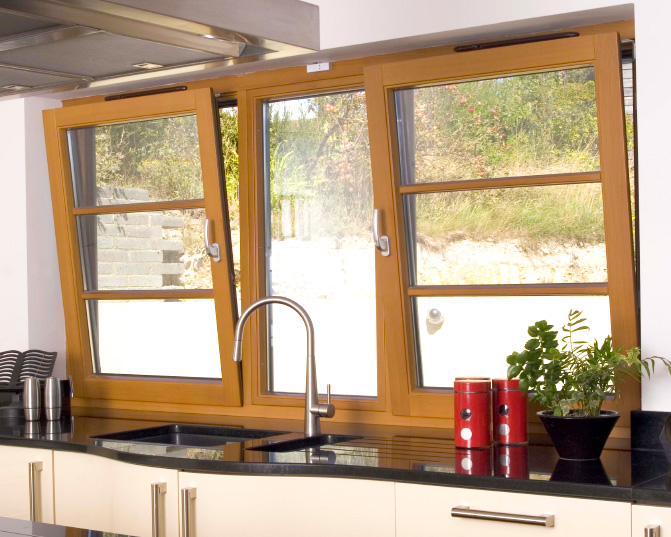
The tilt position on its own doesn’t make a window childproof. In children’s rooms, ask about lockable handles or restrictors.
| Tilt and turn | Casement | |
| How it opens | Inwards, tilting from the top or swinging fully open | Outwards, on side or top hinges |
| Ventilation | Secure tilt position | Night vent position on many designs |
| Cleaning outside glass | From inside | Easy clean hinges help on many designs |
| Space needed | Clear space inside the room | Clear space outside |
| Look | Clean and modern | Traditional, suits most UK homes |
| Cost | Usually higher | Usually lower |
Many homes use both: casement windows on the front of the house and tilt and turn windows upstairs or in a modern extension.
We fit tilt and turn windows in uPVC, aluminium, timber and timber alternative frames, in a wide choice of colours and finishes, with energy efficient Low E double or triple glazing. The best way to judge them is to try the handle yourself in our Guildford showroom.
Yes. Tilt and turn windows lock at several points around the whole sash, and because they open inwards, the hinges sit inside the house where they can’t be tampered with. As with any window, look for frames tested to PAS 24, the recognised standard for enhanced security, and choose lockable handles for ground floor rooms.
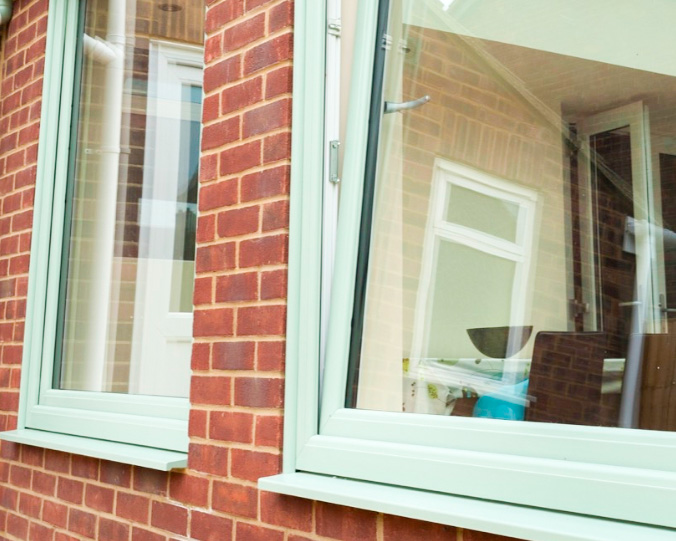
A tilted window is more secure than an open casement because the gap at the top is small and the hardware holds the sash at a fixed angle. It is still an open window, though, so close and lock it when you go out, especially on the ground floor.
Yes. In the turn position a tilt and turn window opens fully inwards, and it can be sized and specified to meet Building Regulations requirements for escape windows in upstairs rooms. We check escape requirements room by room when we survey your home.
Because the top of the window tilts inwards, light rain usually runs down the outside of the glass. In heavy, wind driven rain it is best to close the window, as you would with any open window.
You can, and timber or timber alternative frames help them blend in. On many period homes a sash or flush casement window looks more authentic, and in conservation areas or listed buildings you should check with your council before changing the style of your windows.
See tilt and turn windows in action at our Guildford showroom, or call 01932 344 415 for a free quote.
One of our team would be happy to have a chat with you about your requirements, answer any unanswered questions and measure up at a time that suits you to provide you a free, no obligation quote.
“Extremely knowledgeable and helpful, who knew there was so many options for a front door! In any case we found these guys and girls really straightforward to deal with, helpful and overall nice people.”Francesca East

Sheerwater Glass provides window installation and repairs throughout Surrey and the surrounding areas of our new Guildford showroom as well as Woking. If you’re interested in our services, we encourage you to check if we serve customers in your area by simply typing in your postcode.
If you check and find that we don’t serve customers in your area, in some cases, we may be able to help. Please call us to find out more.