

Get A Quote
One of our team would be happy to have a chat with you about your requirements, answer any unanswered questions and measure up at a time that suits you to provide you a free, no obligation quote.

Cleaning windows is one of those jobs most homeowners put off for as long as possible. It takes time, often needs ladders, and even when it looks spotless, marks seem to appear as soon as the light hits it. If you have a conservatory or glazed roof, keeping the glass clean can feel like a constant task.
This is where self cleaning glass comes in. It is often talked about as if it does the job for you completely, but that is not quite the full story. The technology is clever, practical, and genuinely useful, but it works best when you understand what it can and cannot do.
Despite the name, self cleaning glass does not mean your windows will never need attention again. A better way to think about it is low maintenance glass. It is designed to reduce how often you need to clean, not remove the need entirely.
The glass relies on daylight and rain to do most of the work. During long dry spells, especially in summer, it may need a quick rinse with a hose to keep it performing as it should. When used in the right setting, it can dramatically cut down the effort needed to keep glass looking clear.
Self cleaning glass has a special coating bonded to the outer surface during manufacture. This coating is invisible to the eye but plays a big role in how the glass behaves.
The process works in two stages.
First, daylight helps break down dirt. When ultraviolet light hits the coating, it reacts with organic matter on the surface. Things like pollen, bird mess, and traffic film are gradually loosened and broken down over the course of the day. This happens even when it is cloudy, as UV light still gets through.
Second, rain does the rinsing. Normal glass causes rainwater to bead into droplets. When these dry, they leave marks behind. Self cleaning glass behaves differently. Water spreads evenly across the surface instead of forming droplets. As the water runs down, it lifts away the loosened dirt and dries without streaks.
The result is glass that stays clearer for longer with far less effort.
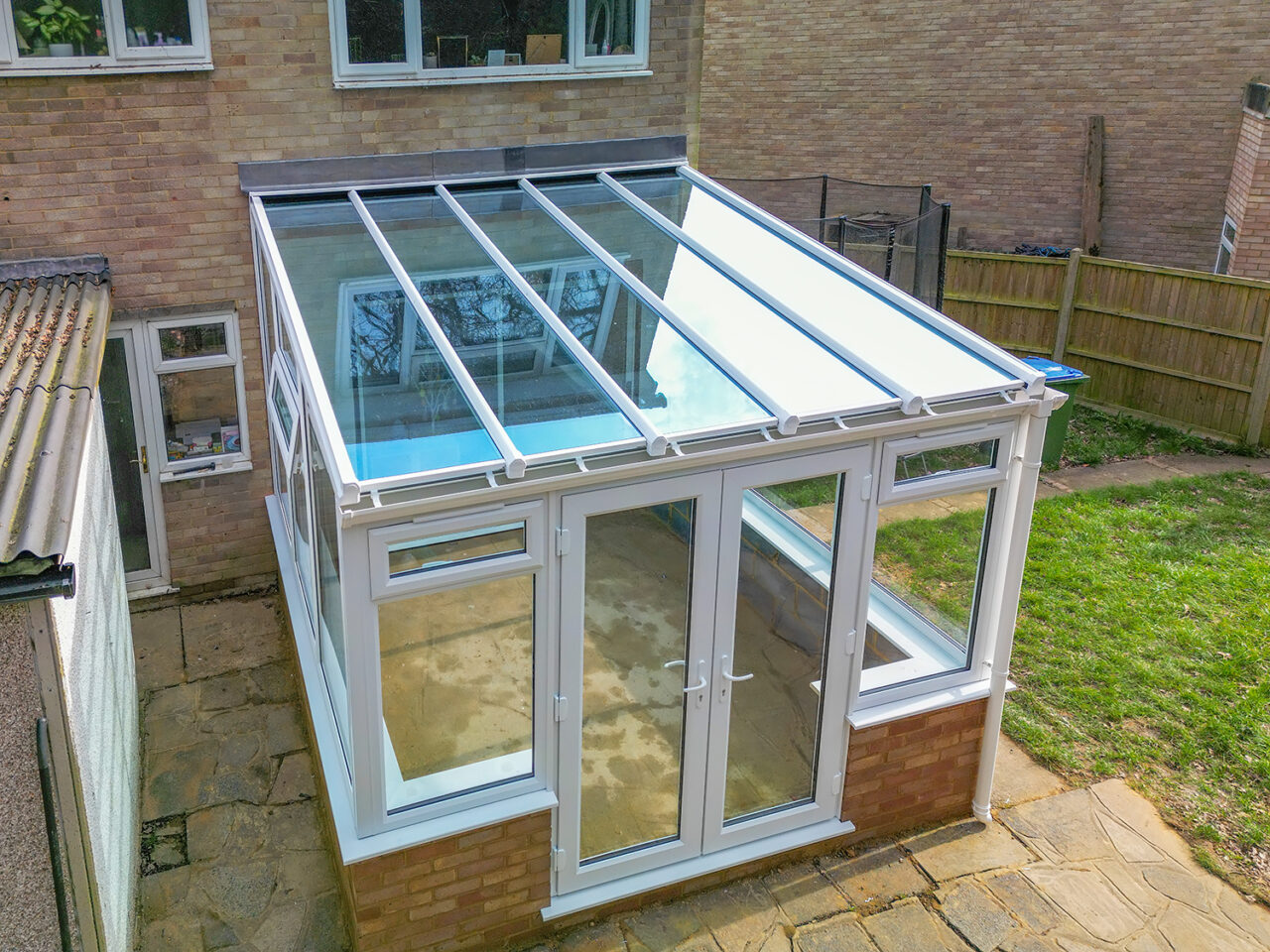
For the rinsing action to work properly, gravity needs to help the water run off the glass. This means the glass must be installed at an angle.
Most manufacturers recommend a minimum pitch of around ten degrees. This makes self cleaning glass especially effective for conservatory roofs, rooflights, and skylights. These areas naturally get more rainfall and daylight, which helps the coating do its job.
On vertical windows, the effect is still there, but it is more subtle. The glass will usually dry more cleanly after rain, but it will not benefit as much as angled glazing.
One of the biggest risks to self cleaning glass comes during installation. The coating is sensitive to certain materials, particularly silicone sealants.
If silicone comes into contact with the coated surface, it can stop the self cleaning action in that area permanently. This is why careful fitting by experienced installers matters. Frames, seals, and finishes must be applied correctly to protect the coating and ensure the glass performs as intended for years to come.
When comparing standard glazing with self cleaning glass, the main difference is how often you need to clean.
Standard glass tends to hold onto dirt, especially during warm weather when grime can bake onto the surface. Rain often leaves visible marks once it dries. With self cleaning glass, organic dirt breaks down more easily and rainwater rinses the surface more evenly. Many homeowners find they only need to clean it once or twice a year, rather than every few months.
There is usually a higher upfront cost, but for hard to reach areas like glazed roofs, the reduced maintenance often makes it worthwhile.
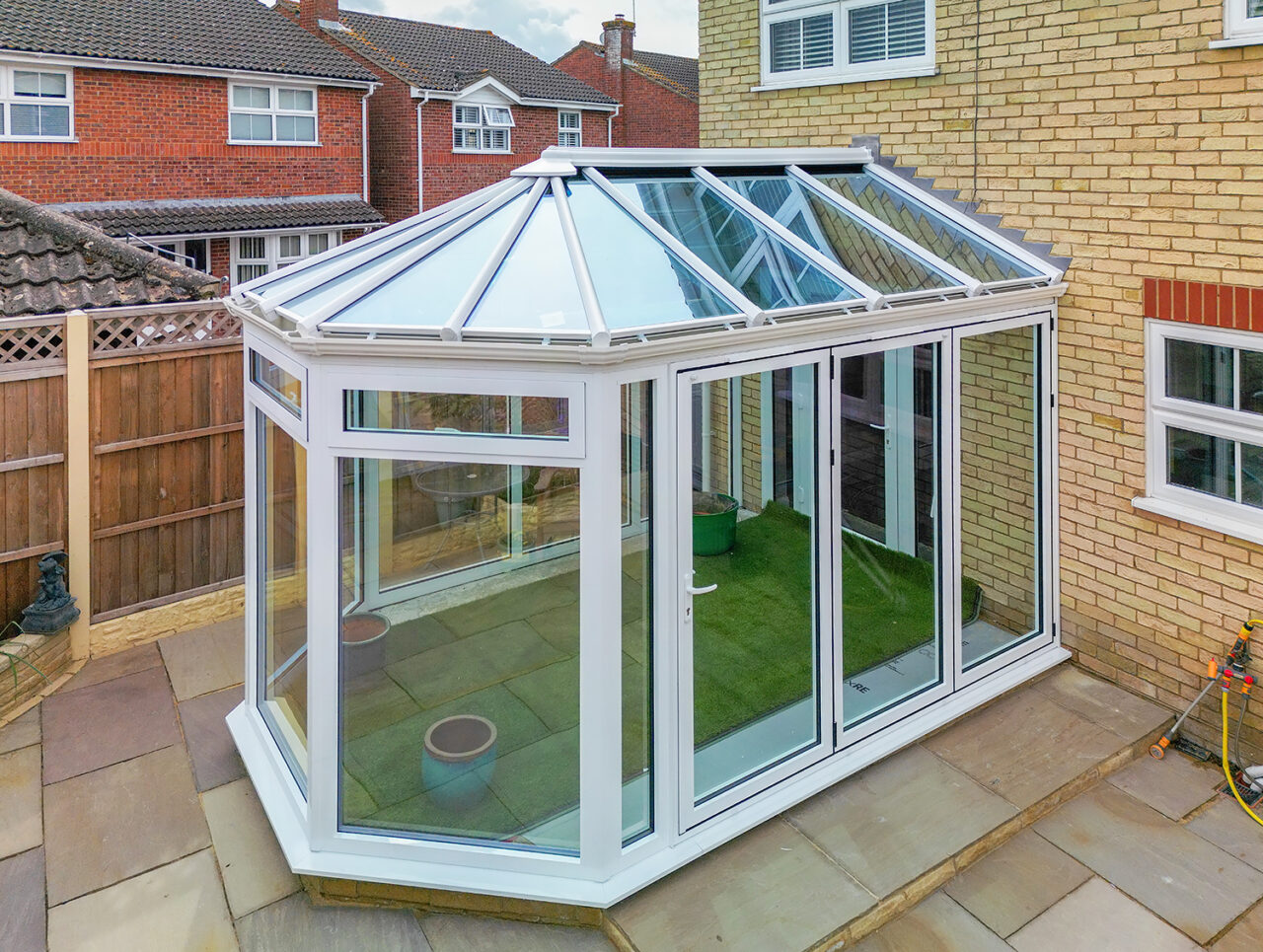
It might sound surprising, but the British climate is actually well suited to self cleaning glass. The mix of daylight, cloud cover, and regular rainfall creates ideal conditions for the coating to work.
In hotter, drier countries, homeowners often need to rinse their glass frequently to replace the role of rain. Here in the UK, natural weather patterns do much of the work for you, particularly during spring and autumn.
The coating is designed to last for the life of the glazing unit, but it does need to be treated correctly.
Avoid abrasive cleaners, cream products, or anything that could scratch the surface. Metal edged squeegees should also be avoided. If the glass needs manual cleaning, warm water and a soft cloth are enough. During dry periods, a simple hose rinse can help clear dust and keep the glass working efficiently. If you’d rather leave it to the professionals (which is highly recommended), let our sister brand Sheerwater Clean take care of it for you.
Does it work at night?
The rinsing effect works at any time, as it relies on water. The dirt breaking process is driven by daylight, although some of the effect continues after sunset thanks to energy stored during the day.
What if it does not rain for a while?
Dirt will still be loosened by daylight, but it will sit on the surface until it is washed away. A quick spray with a hose is usually all that is needed.
Will the coating wear off?
The coating is bonded into the glass during manufacture, not applied afterwards. As long as it is not damaged by harsh cleaning, it should last as long as the glass itself.
Self cleaning glass is not a gimmick, but it does work best when expectations are realistic. For roofs, rooflights, and hard to reach glazing, it offers a clear advantage. Less time cleaning, fewer streaks, and glass that stays clearer for longer makes it a sensible choice for many homeowners.
If you are planning a conservatory upgrade or new roof glazing, it is well worth considering as part of the design.
Get in touch with our experts today to find out more.
One of our team would be happy to have a chat with you about your requirements, answer any unanswered questions and measure up at a time that suits you to provide you a free, no obligation quote.
“Extremely knowledgeable and helpful, who knew there was so many options for a front door! In any case we found these guys and girls really straightforward to deal with, helpful and overall nice people.”Francesca East
Sheerwater Glass provides window installation and repairs throughout Surrey and the surrounding areas of our new Guildford showroom as well as Woking. If you’re interested in our services, we encourage you to check if we serve customers in your area by simply typing in your postcode.
If you check and find that we don’t serve customers in your area, in some cases, we may be able to help. Please call us to find out more.